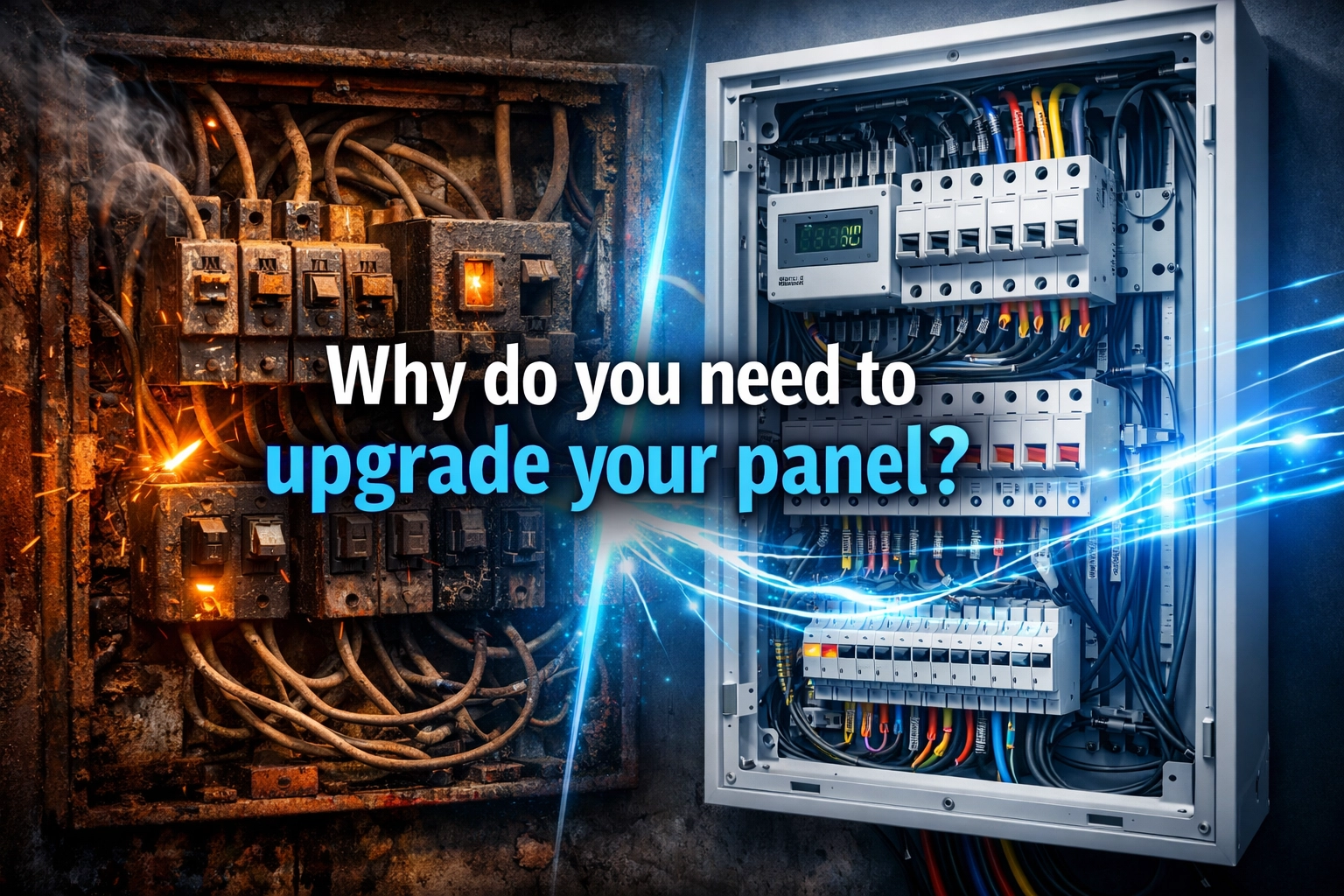
Why Do You Need to Upgrade Your Panel?
In the modern landscape of Charleston, SC, our homes are doing more work than ever before. From the historic charm of downtown residences to the growing suburban communities in Mount Pleasant and Summerville, the demand for electricity has reached an all-time high. Yet, while we invest in the latest smart appliances, high-efficiency HVAC systems, and electric vehicles, the "heart" of the home, the electrical panel, is often overlooked.
An electrical panel upgrade is not merely a cosmetic home improvement; it is a fundamental necessity for safety, functionality, and future-proofing. As of March 2026, the intersection of technological advancement and strict safety regulations like the NEC 2026 has made the state of your electrical system more critical than ever.
1. Understanding the Role of Your Service Panel
Your electrical panel, often called the breaker box or service panel, acts as the central distribution point for all electricity entering your home. It receives power from the utility company and divides it into individual circuits that feed your lights, outlets, and appliances. More importantly, it acts as a safety gatekeeper. When a circuit draws too much power, the breaker "trips" to cut off the flow, preventing the wires from overheating and potentially starting a fire.
Many older homes in the Charleston area were built when a 60-amp or 100-amp service was considered sufficient. In 2026, with the average household operating multiple computers, smart devices, and high-draw kitchen appliances simultaneously, these older panels are frequently pushed beyond their design limits. Upgrading to a 200-amp service is now the standard for modern living.
2. Identifying the Signs of an Overloaded System
You may not think about your panel daily, but it often provides subtle, and sometimes urgent, warning signs that it is struggling to keep up. Recognizing these symptoms early can prevent costly troubleshooting and repairs down the road.
- Frequent Breaker Tripping: If you find yourself walking to the garage or basement to reset a breaker every time you use the microwave and a space heater, your panel is telling you it's overloaded.
- Flickering or Dimming Lights: When large appliances like your air conditioner kick on, do your lights dip in brightness? This indicates that the appliance is "robbing" voltage from other circuits because the panel cannot supply enough total current.
- Physical Heat or Smells: If the panel door feels warm to the touch or if you detect a faint metallic or burning odor near the box, this is an emergency. It indicates that wires are overheating or arcing.
- The Use of Multiple Power Strips: Relying on daisy-chained power strips is a sign that your home's original device installation and circuit layout are inadequate for your needs.

3. The Demands of Modern Lowcountry Living
The climate in South Carolina places unique stresses on electrical systems. Our long, humid summers require HVAC systems to run at peak capacity for months at a time. Furthermore, as Charleston homeowners transition toward greener technology, the infrastructure must support it.
Electric Vehicle (EV) Charging
The adoption of EVs has skyrocketed by 2026. Installing a Level 2 charger at home typically requires a dedicated 40-amp to 60-amp circuit. For an older 100-amp panel, adding this load is often impossible without a comprehensive panel upgrade. Without an upgrade, you risk damaging your vehicle's charging hardware or causing a house-wide power failure. Learn more about our EV charger installation services.
High-Efficiency HVAC and Smart Appliances
Modern heat pumps and smart kitchen suites offer incredible energy efficiency, but they often require stable, high-capacity power to operate their sensitive electronic components. An outdated panel with "dirty" power delivery can shorten the lifespan of these expensive investments.
4. Safety Hazards and Outdated Technology
If your Charleston home still features a fuse box or specific brands of older panels, you may be living with a significant fire risk. During a safety inspection, professionals often look for legacy panels that are no longer considered safe by current standards.
- Federal Pacific Electric (FPE) Panels: These were common in homes built between the 1950s and 1980s. Testing has shown that their breakers often fail to trip during an overload, leading to thousands of fires annually.
- Zinsco Panels: Similar to FPE, these panels have a design flaw where the breakers can melt to the bus bar, meaning they will never trip, even if the wires are red-hot.
- Aluminum Wiring Compatibility: Many panels from the 1960s and 70s were not designed to handle the expansion and contraction of aluminum wiring, which can lead to loose connections and arcing.
Upgrading to a modern panel ensures that you have AFCI (Arc-Fault Circuit Interrupter) and GFCI (Ground-Fault Circuit Interrupter) protection, which are now mandated by the latest electrical codes to prevent both fires and electrocution.

5. Compliance with NEC 2026 and Local Regulations
Electrical codes are not static; they evolve to incorporate the latest safety research. The 2026 National Electrical Code (NEC) has introduced stricter requirements for outdoor emergency disconnects and expanded the areas of the home that require arc-fault protection.
When you perform a remodel or wiring project, local Charleston building inspectors will require that the work meets the current code. Often, this necessitates a panel upgrade because the old equipment cannot accommodate the required safety breakers. Staying compliant is not just about passing an inspection; it's about ensuring that your home remains insurable. Many insurance companies now refuse to renew policies for homes with FPE panels or ungrounded systems, or they may significantly increase premiums.
6. The Benefits of Professional Installation
While some home projects are suitable for the DIY enthusiast, electrical panel work is strictly a job for licensed professionals. At EmergenServe, we ensure that every residential panel upgrade is handled with precision.
A professional upgrade involves:
- Load Calculation: We determine the exact power needs of your home to ensure the new panel is sized correctly.
- Permitting and Utility Coordination: We handle the paperwork with local authorities and coordinate with the utility provider to disconnect and reconnect your service.
- Grounding and Bonding: We ensure your entire system is properly grounded, which is essential for surge protection and protecting your electronics from lightning strikes, a common occurrence in the Lowcountry.
- Labeling: We provide a clear, accurate directory of your circuits, making future maintenance simple.
7. Future-Proofing and Property Value
An upgraded electrical panel is a significant selling point in the Charleston real estate market. Potential buyers today are looking for "turn-key" homes. Seeing a modern, 200-amp panel with room for expansion tells a buyer that the home has been well-maintained and is ready for their technology, from home theater systems to home offices.
Furthermore, an upgrade allows you to integrate smart home energy monitors. These devices sit inside your panel and provide real-time data on your energy usage, helping you identify "energy vampires" and lower your monthly utility bills.

Conclusion: Investing in Peace of Mind
Upgrading your electrical panel is an investment in the safety and longevity of your home. It eliminates the frustration of tripped breakers, protects your expensive modern appliances, and ensures that your family is shielded from the risks of electrical fires.
As we move further into 2026, the gap between what old electrical systems can provide and what modern life requires will only continue to grow. Don't wait for a failure to occur. Whether you are planning a new construction project or simply want to ensure your current home is up to standard, a professional evaluation is the first step.
For more information on how to modernize your home's electrical system, or to schedule your comprehensive safety inspection today, contact the team at EmergenServe. Your home's "heart" deserves the best care to keep your life running smoothly.