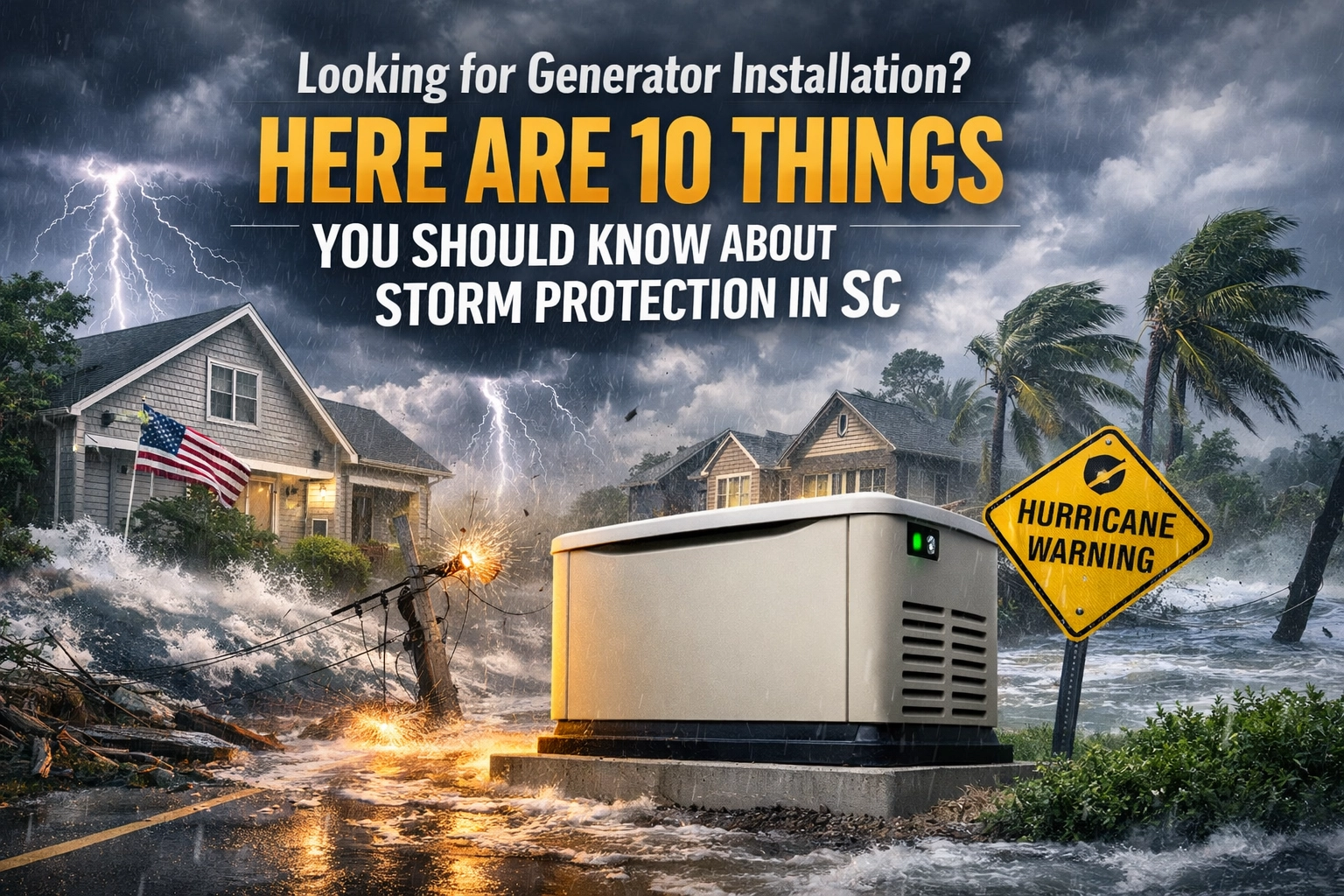
Generator Installation in SC: 10 Things to Know
Charleston encounters significant weather events that frequently result in power grid failures. Secure electrical infrastructure is mandatory for maintaining residential safety and functionality during these periods. This guide outlines the technical requirements for generator installation in Charleston, SC.
1. Determining Your Home's Power Needs
You must calculate the total electrical load of your property before selecting a generator unit.
A precise assessment involves measuring the starting and running wattage of all essential appliances and systems. Residential generators typically range from 8.5 to 22 kilowatts. An average home in South Carolina usually requires approximately 11 kilowatts to maintain basic operations, including refrigeration, lighting, and limited climate control. If you intend to operate high-draw equipment like central air conditioning units or electric water heaters, a larger capacity unit is necessary. Our team evaluates your current electrical system capacity, which often relates to whether you need an electrical panel upgrade to handle the additional integration.
2. Optimal Placement Requirements
The physical location of the generator must prioritize stability and drainage to prevent equipment failure during floods.
Generators must be installed in areas least prone to water accumulation. In the Charleston Lowcountry, specific regulations apply to Special Flood Hazard Areas. New installations in these zones must be positioned at or above two feet freeboard, which is defined as the base flood elevation plus two feet. This elevation is achieved through the construction of reinforced stands or pads. Failure to adhere to these height requirements can lead to hardware damage and non-compliance with local building codes.

3. Maintain Proper Safety Clearances
Strict distance requirements are enforced to prevent carbon monoxide poisoning and fire hazards.
Safety regulations dictate that a generator must be placed at least 18 inches away from the exterior of the house. Furthermore, the unit must be located at least 60 inches (5 feet) from any windows, doors, or fresh air intakes. These clearances ensure that exhaust gases do not enter the living space. Proper ventilation is a critical component of safety inspections performed during and after the installation process.

4. Plan Ahead for Installation Timeline
The process from selection to operational status requires several weeks of preparation.
Homeowners should anticipate a lead time of four to eight weeks. This duration accounts for equipment procurement, delivery logistics, and the scheduling of specialized subcontractors. The installation involves multiple trades, including electricians for the device installation and gas plumbers for fuel line connections. Planning for generator installation in Charleston, SC should begin well before the peak of the Atlantic hurricane season to ensure the system is ready when needed.
5. Electrical Permits Are Required
You cannot legally install a fixed generator without obtaining the necessary permits from local jurisdictions.
In the Charleston area, an \"Electrical – Single Family/Duplex dwelling\" permit is mandatory for any fixed generator installation. Homeowners attempting to pull their own permits may be required to pass a Homeowners Electrical Test. Engaging a professional service like EmergenServe ensures that all permit applications are filed correctly and that the work is performed by licensed individuals, which is a requirement for many insurance policies and manufacturer warranties.
6. Additional Permits May Be Needed
Complex installations involving fuel lines or elevated structures require secondary authorizations.
If the generator requires a stand taller than 3 feet, an \"Accessory Structure\" permit is usually necessary. Furthermore, a separate fuel gas permit is required for natural gas or propane line extensions; homeowners are legally prohibited from performing work on fuel gas systems. If the unit is located within a designated drainage easement, an encroachment permit must also be secured. Navigating these requirements is a standard part of residential electrical services.
7. Professional Installation Involves Multiple Steps
The installation process follows a specific technical sequence to ensure system integrity.
The procedure begins with the preparation of a level concrete pad foundation to support the weight of the unit. Following the foundation work, the generator is connected to the home's electrical system through a transfer switch. The final stages involve the connection to the fuel source — either natural gas or liquid propane — and a comprehensive inspection by county or city officials to verify code compliance. This structured approach prevents common errors found in amateur setups.
8. Automatic Transfer Switch Provides Seamless Power
The automatic transfer switch is the component responsible for transitioning power sources during an outage.
This device is installed near the main electrical panel. It continuously monitors the incoming utility power. When a disruption is detected, the switch automatically disconnects the home from the grid and activates the generator. This prevents \"backfeeding,\" a dangerous condition where electricity flows back into the utility lines, posing a risk to line workers. The switch also manages the return to utility power once the grid is stabilized.

9. Choose Your Fuel Type
The choice of fuel — diesel, natural gas, or liquid propane — depends on local availability and storage capacity.
Most whole-house generators in South Carolina utilize natural gas or liquid propane. Natural gas is preferred for its continuous supply through underground lines, eliminating the need for refueling. Liquid propane is a viable alternative for properties without natural gas access, though it requires an on-site storage tank. Portable generators typically run on gasoline or diesel, which requires manual refueling and careful storage of flammable liquids. Selecting the right fuel source is a key part of remodel wiring and system design.

10. Installation Must Meet Local Codes
All electrical and structural work must strictly adhere to the National Electrical Code (NEC) and local SC building standards.
Local codes in Charleston are updated periodically to reflect new safety data and environmental challenges. Professional installers are responsible for ensuring that every aspect of the project — from the wire gauge used to the grounding method — meets these standards. Adherence to these codes is verified during the final inspection and is essential for maintaining the long-term reliability of your storm protection system. For more information on maintaining your home's electrical health, see our post on smart upgrades for your Charleston home.
Generator installation in Charleston, SC is a technical process that requires precise planning and execution. Ensuring your property is equipped with a reliable power source is a fundamental aspect of storm readiness in South Carolina. For professional assistance with residential or commercial electrical needs, contact a licensed specialist.